Ja, es gab wirklich mal einen Eisbären im Tower von London...-
Heute geht es also vom Eisbärengefängnis in Churchill/Manitoba noch mal ganz schnell und weit zurück ins Mittelalter, denn das berühmt berüchtigte Gefängnis in London, der Tower, hatte ebenfalls einen Eisbären neben anderen Tieren bei sich untergebracht.
Yes, indeed, there was a polar bear in the Tower....
So today not Churchill but just a quick look to London, back into the Dark Ages, as the London Tower was "home" not only to humans but also to a polar bear and to other animals...
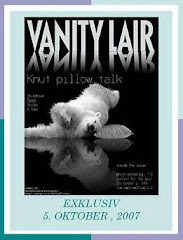
 Leider habe ich davon keine Illustration gefunden, deshalb hier noch einmal ein Foto von der Floating Polar Bear Aktion in London, die bereits vor einiger Zeit hier Thema war... Und nun auf zurück ins finstere Mittelalter!
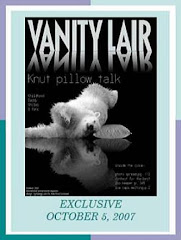
Unfortunately I didn't find an illustration, that one was the only polar bear I could find close to the Tower...subject already in another posting some months ago.
 "Where do you keep a polar bear in London....? Hmmmm. For most of its existence, the Tower of London housed the Royal Menagerie - a collection of wild animals that England's kings and queens had been lumbered with following the donation of animals as 'presents' from foreign admirers. The first substantial references to animals being kept in the Tower were three leopards gifted to Henry III in 1235 by Frederick II, Holy Roman Emperor who married the king's sister Isabella. It's fairly clear that these leopards didn't last long - by 1240 there is a reference to a single leopard and then there is silence. After this initial flourish, the Tower housed (perhaps) one lion, or leopard, until 1252 when Henry decided to have his family's collection of wild animals bought to the Tower from Woodstock, just outside Oxford. How the keepers at Woodstock managed to crate and transport lynxes, camels, leopards and lions over 60 miles to the Tower is anyone's guess, but they duly arrived. In the same year came a 'polar bear' from the king of Norway, which caused more fuss. Running low on appropriate food, Henry declared that 'one muzzle and one iron chain to hold that bear without the water; one long, strong cord, to hold the same bear fishing or washing himself in the river Thames'. The polar bear was a regular sight fishing for salmon on the banks of the Thames.
  A few years later an elephant arrived (...); captured during the crusades in Palestine and gifted by Louis IX of France. It is evident that the keeper of the growing menagerie had little idea of how to keep these exotic animals, but a special wooden house was built for the elephant which gave him/her the vast estate of a enclosure measuring 20ft x 40ft. The elephant was dead within 2 years, even though at the time they were thought to live for many centuries. Henry's son, Edward I, went on to extend the menagerie adding a lion and an 'ounce' (snow leopard). It was then that the menagerie opened to the public - but not to the masses because of the high entrance fee (although Henry VI later declared that anyone providing a cat or dog as lion feed could gain entry for free). But the lions were just as unlucky as the elephant, and the first leopards, because they all died en masse in 1436 - cause unknown, but no doubt due to their management (they were kept in cages measuring 6.5ft x 10ft). ...
 Lions did return, but in 1604 King James decided that they should earn their keep by being baited with dogs for spectacular sport. If he bored of this sport, he would send live animals into the lions' den and watch them being torn apart - lambs, chickens, dogs, etc. The king encouraged the lions to breed during his reign (although any cubs rarely survived into adulthood) - and it wasn't for 'conservation' purposes...
Another addition to James' menagerie was a tiger, presented in 1613 by the Ambassador Extraordinary of Savoy. It joined a distinguished company of 11 lions, 2 leopards, 3 eagles, 2 mountain-cats and a jackal - the polar bear had obviously died by then.
 The life of the replacement elephant, also during James' reign, fared little better than his predecessor. Coming from Spain in 1623 (along with 5 camels), as a gift from the Spanish king, the elephant was given nothing else but wine to drink (a gallon a day!) because, according to his keepers, it was the only thing that he would drink and it kept out the cold. Thus this elephant enjoyed a short, but pleasant life...no doubt the keepers thought that he had caught a chill! Even as late as the end of the 18th century elephants were still being given nothing to drink but wine. The menagerie's fortunes waned during the reign of James' son, Charles I, but then its popularity as a 'tourist' attraction increased right up until the late eighteenth century when it was by far the most popular attraction in the capital: 'going to see the lions' was de rigueur for wealthy Londoners and foreigners (left: Marco, one of the Tower Lions, 1749). The collection now contained many species bought over from India and Africa (due to the expanding Empire): rhino, antelope, tigers and monkeys (which were allowed to mingle freely with visitors in The Monkey Room). Unfortunately, some animals at the zoo were also used for experiments. In 1791 George III was given yet another ostrich and the Tower staff saw its existence as a perfect opportunity to test a theory which had been present since medieval times: that ostriches were able to digest iron. Unsurprisingly, the ostrich died fairly promptly after a quantity of iron nails were left in its cage; upon dissection it was found to have swallowed over 80 nails - the theory was well and truly refuted! By 1809 there was still a sizable collection of animals, but not a particularly happy or healthy one. The interest in the menagerie has waned (due to increasing compassion for animals and the lack of novelty provided by the animals) and the number of animals had dwindled (due to a lack of foreign 'gifts' and colonial acquisitions). What was needed was an injection of new blood (in keepers and animals) and in 1822, Alfred Cops was appointed head keeper. He was a zoologist and an expert in animal behaviour, a man with extensive training and experience looking after captive animals. Along with the passion of the King, George IV, he turned the dwindling menagerie into a well-run collection of over 60 species (see right) of animal living in far better conditions than their previous cramped and unhealthy housing.
  The success of the menagerie was assured....until the menagerie finally closed in the 1830s and all the animals were passed onto the Zoological Gardens of the Zoological Society of London in the Regent's Park (the beginnings of London Zoo)."
 Info taken from: The Tower Menagerie (2003) - Daniel Hahn/see book cover above
This article has been published by Hannah Velten in her blog Round The Water Through. She is an expert in cows(check out her book) interested in all sorts of animal history.
Related articles:
-Absolute Astronomy/Menagerie
-The Tower Menagerie by Daniel Hahn/The Independent 2003
-Polar Bear Game Script pdf
-The Tower of London
Photo credits:
-Was there ever...(1), Floating Polar Bear (2), - The Tower Menagerie (3), Escape Old London's most feared prison (4).
- All other photos found in Hannah Velten's blog